


/1.%20Visuals/Website/Icons/RegulatoryCompliance_Visuals_Navigation%20(1).png?width=40&height=40&name=RegulatoryCompliance_Visuals_Navigation%20(1).png)


/1.%20Visuals/Website/Icons/Testing_Visuals_IconNavigation%20(1).png?width=40&height=40&name=Testing_Visuals_IconNavigation%20(1).png)


/1.%20Visuals/Website/Icons/government%201.png?width=40&height=40&name=government%201.png)
/1.%20Visuals/Website/Icons/energy_utilities%201.png?width=40&height=40&name=energy_utilities%201.png)
/1.%20Visuals/Website/Icons/defense%201.png?width=40&height=40&name=defense%201.png)
/1.%20Visuals/Website/Icons/food%201.png?width=40&height=40&name=food%201.png)
/1.%20Visuals/Website/Icons/finance%201.png?width=40&height=40&name=finance%201.png)
/1.%20Visuals/Website/Icons/manufacturing%201.png?width=40&height=40&name=manufacturing%201.png)


/1.%20Visuals/Website/Icons/CTG%20Academy.png?height=56&name=CTG%20Academy.png)


 Austria
 Belgium
 Denmark
 Germany
 Italy
Italy Romania
 Sweden
 Switzerland
 The Netherlands
 United Kingdom
 United States
A workplace roadmap can be carefully researched, widely supported and strategically sound, yet still lose relevance before the organization has completed the first wave of delivery
The roadmap was built for a slower pace of change
The traditional advisory cycle is familiar: assess the current environment, define a target state, identify gaps and create a multi-year roadmap. The model provides structure and can help organizations align stakeholders around a common direction.
The problem is not that this process is inherently wrong. The problem is that the environment around it changes faster than the process can respond. Workplace platforms evolve continuously. AI creates new opportunities and new governance questions. Security priorities change. Employee expectations develop. Business strategies shift. A roadmap that assumes stable conditions quickly becomes a record of past decisions rather than a guide to the next one.
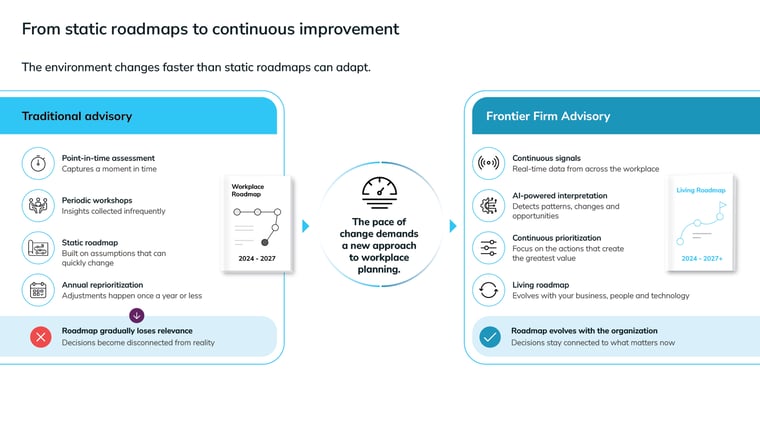
Image 1: From Static Roadmaps To Continuous Improvement
Three reasons static roadmaps lose relevance
1. They start with a point-in-time view
Every assessment captures a moment. It reflects the available evidence, current priorities, stakeholder input and technology landscape at that time. Once the assessment ends, the environment keeps moving.
New service data may expose recurring friction. An acquisition may introduce a different workplace environment. A leadership change may alter investment priorities. A previously immature capability may become urgent because of a new AI initiative. Unless these changes are incorporated, the roadmap gradually separates from reality.
2. They depend on static assumptions
Roadmaps usually contain assumptions about funding, capacity, dependencies, adoption and business readiness. These assumptions are necessary, but they should not be treated as permanent facts.
When one assumption changes, the impact can spread across multiple initiatives. A delayed identity program can affect device modernization, AI adoption and security controls. Limited change capacity can reduce the value of launching several features at once. A static roadmap rarely makes these relationships visible enough to support fast reprioritization.
3. They separate planning from operational learning
The teams that create roadmaps are not always the teams that operate the workplace. Valuable signals then remain trapped in service reviews, experience platforms, incident trends, adoption reports and local stakeholder conversations.
If operational learning does not flow back into strategic planning, the roadmap cannot improve. It becomes a delivery checklist, while the evidence needed to challenge or refine it accumulates elsewhere.
A roadmap can be high quality and still become obsolete
This is an important distinction. An outdated roadmap is not necessarily evidence of poor consulting or weak analysis. It can be the predictable result of using a periodic planning instrument in a continuously changing environment.
That distinction changes the response. The answer is not simply to create a more detailed roadmap. Adding more initiatives, milestones and dependencies can create the appearance of control while making adaptation harder. The answer is to change the role of the roadmap itself.
From fixed plan to living decision instrument
A living workplace roadmap does not abandon long-term direction. It connects that direction to a regular decision cycle. The organization retains strategic themes and intended outcomes, while continuously reviewing which actions should be advanced, delayed, combined or stopped.
This requires a small set of consistent questions:
-
What has changed in the business, workforce or technology landscape?
-
What do current operational and employee experience signals indicate?
-
Which maturity gaps now constrain the highest-value opportunities?
-
Which recommendations remain relevant, and which need to be reconsidered?
-
What should the organization do now, prove next, build as a foundation and scale later?
The result is not constant disruption. It is controlled adaptability. Decisions can change without losing the logic behind them, because priorities are evaluated against shared criteria rather than personal urgency.
Organizations need guidance, not just documents
A roadmap is valuable when it supports decisions. It is less valuable when completing the document becomes the objective. This is why the advisory relationship must extend beyond the initial assessment and presentation.
Continuous guidance helps organizations interpret new information, preserve context and connect day-to-day signals to strategic choices. It also makes accountability clearer. Recommendations can be revisited with the people responsible for execution, and outcomes can be compared with the assumptions that informed the original decision.
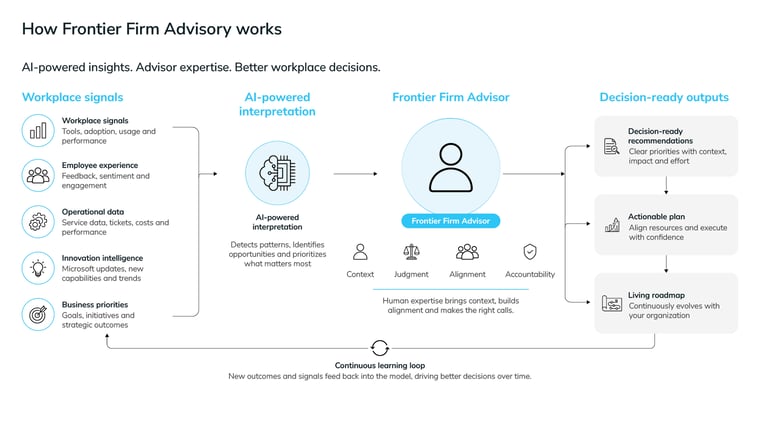
Image 2: How Frontier Firm Advisory Works
Where maturity assessment meets AI-powered advisory
This is where the Frontier Firm Maturity Model and Frontier Firm Advisory complement one another.
The Frontier Firm Maturity Model establishes a structured baseline by assessing capabilities across People, Process, Technology and Governance. From this baseline, organizations can develop a roadmap that reflects their current maturity, priorities and advancement opportunities.
Historically, these roadmaps were reviewed periodically through workshops, assessments or major transformation initiatives. However, the pace of workplace change has accelerated significantly.
Frontier Firm Advisory Services builds on the maturity baseline with an AI-powered, agentic layer that can evaluate large volumes of operational performance data, employee experience insights, workplace maturity indicators, customer priorities and Microsoft innovation signals in a heartbeat. Instead of relying only on periodic workshops or manual interpretation, it continuously connects these signals, detects what has changed and translates the evidence into practical next-best actions.
The result is a living roadmap that evolves alongside the organization. Because Frontier Firm Advisory is powered by agentic AI and guided by advisory expertise, recommendations can be refreshed much faster and remain relevant as business priorities, technologies and workplace realities change.
The shift from annual planning to continuous prioritization
Traditional planning asks: what should we deliver over the next several years? Continuous prioritization asks: given our ambition, evidence and constraints, what should we do next?
Both questions matter. The second question keeps the first one useful.
The challenge is not creating a workplace roadmap. The challenge is maintaining a decision process that keeps the roadmap relevant as priorities, evidence and technology change.
This question is explored further in the next article, AI Won’t Replace Workplace Advisors. It Will Make Them Better. It explains how AI can help advisors interpret more signals, maintain continuity and provide more continuous guidance, while human advisors remain essential for context, judgment, alignment and accountability.
/1.%20Visuals/Website/Icons/x-twitter.svg)


