

/1.%20Visuals/Website/Icons/RegulatoryCompliance_Visuals_Navigation%20(1).png?width=40&height=40&name=RegulatoryCompliance_Visuals_Navigation%20(1).png)


/1.%20Visuals/Website/Icons/Testing_Visuals_IconNavigation%20(1).png?width=40&height=40&name=Testing_Visuals_IconNavigation%20(1).png)


/1.%20Visuals/Website/Icons/government%201.png?width=40&height=40&name=government%201.png)
/1.%20Visuals/Website/Icons/energy_utilities%201.png?width=40&height=40&name=energy_utilities%201.png)
/1.%20Visuals/Website/Icons/defense%201.png?width=40&height=40&name=defense%201.png)
/1.%20Visuals/Website/Icons/food%201.png?width=40&height=40&name=food%201.png)
/1.%20Visuals/Website/Icons/finance%201.png?width=40&height=40&name=finance%201.png)
/1.%20Visuals/Website/Icons/manufacturing%201.png?width=40&height=40&name=manufacturing%201.png)


/1.%20Visuals/Website/Icons/CTG%20Academy.png?height=56&name=CTG%20Academy.png)


 Global
 Austria
 Belgium
 Denmark
 Germany
 Italy
Italy Romania
 Sweden
 Switzerland
 The Netherlands
 United Kingdom
 United States
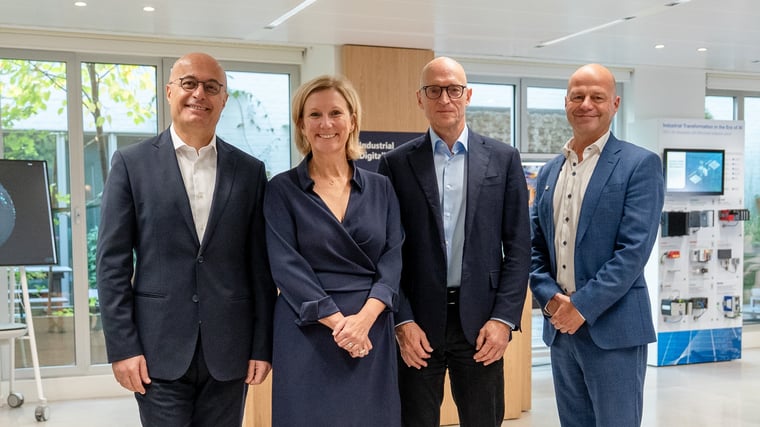
Cegeka has been named sovereignty partner at the Microsoft Innovation Hub in Brussels, a new collaboration that pairs Microsoft's Sovereign Cloud technology with Cegeka's hands-on experience running critical, regulated IT environments. Together, the two companies will help organizations work out how much control they need over their data, infrastructure and applications, and how to put that control in place and keep it as regulations evolve.
European regulation and growing concern about digital dependencies have pushed sovereignty to the top of the agenda for organizations across regulated sectors, from finance to healthcare to government, but few have a clear answer that holds up workload by workload. A core banking system and a public website don't need the same safeguards, and treating them the same way is costly in both directions: maximum control everywhere burns budget and flexibility, while under-protecting the wrong system creates real regulatory and continuity risk.
"Sovereignty comes up in almost every client conversation I have," says Koen Deryckere, CEO of Cegeka. "Most organizations aren't asking which technology to buy. They want to know how much control they really need over certain workloads, and how to keep that control once a system is running. We start from their risks and requirements and design a set-up that gives them real control without holding back innovation. Having both Microsoft's and Cegeka’s experts involved from the start makes that conversation a lot more concrete."
Working together in the Innovation Hub
Inside the Innovation Hub, clients work through their own situation alongside specialists from both companies. Microsoft brings the platform, product and policy expertise; Cegeka translates that into the client's actual architecture, security, governance and day-to-day management. Cegeka supports the entire Sovereign Cloud Continuum portfolio, which can mean Sovereign Public Cloud, Azure Local (connected or disconnected) or a private cloud environment for organizations with strict requirements on data location, access and operational control.
"Digital sovereignty is ultimately about giving organizations the confidence that they remain in control of their digital future. As business needs, technologies and regulations evolve, customers want the flexibility to make the choices that are right for their organization. Through the Microsoft Innovation Hub, they can explore different sovereign cloud approaches and understand what these mean in practice. Together with Cegeka, we help customers turn those insights into concrete solutions that support growth, resilience and long-term success", says Marijke Schroos, General Manager of Microsoft Belux.
From a quick-scan workshop to a fully managed environment
The engagement is designed to scale with how far along a client is. It starts with a quick-scan workshop at the Innovation Hub covering a limited set of workloads, giving organizations an early view of their priorities, risks and possible architecture direction. From there, clients with a concrete project move into Cegeka's full Sovereignty Assessment, which produces a roadmap.
Cegeka then takes that roadmap into a proof of concept and, where clients want it, into full operational management, either independently or alongside the client's own teams. Built-in monitoring and reporting confirm that controls are actually working and give organizations evidence they can use to demonstrate compliance as rules change.
Why Microsoft chose Cegeka
Microsoft selected Cegeka for the Innovation Hub because of its track record in sovereignty, cybersecurity, data center infrastructure and business-critical environments. Cegeka runs its own infrastructure across Europe and delivers public and hybrid cloud services directly, so clients can go from advice to implementation to long-term management with one partner instead of handing off between vendors at each stage.
Cegeka has also built a sovereignty dashboard for Microsoft environments that gives clients continuous visibility into where their workloads run and flags emerging sovereignty risks, so they can track their sovereignty posture as their environment changes rather than relying on a one-time assessment.
/1.%20Visuals/Website/Icons/x-twitter.svg)


