The origins of the Groeipakket date back to October 2011, when the sixth state reform was approved. One of the many decisions: transferring child benefits from the federal government to the communities and regions. Instead of child benefits, Flanders decided to pay out a Groeipakket, which bundles child benefits with other family allowances, including former school allowances. Since 2019, the Agentschap Uitbetaling Groeipakket (VUTG) oversees the payment providers and is responsible for the execution of the Groeipakket and its applications (CGPA).
As of 2025, approximately 800 case managers ensure that nearly 1 million Flemish families receive their Groeipakket correctly every month. To support them in processing more than 2.6 million tasks per year—of which only about a quarter actually require action—VUTG decided to use artificial intelligence to process tasks related to family composition and personal data more efficiently.
The goal is to provide an AI-driven estimate of the likelihood that a task requires action, enabling case managers to prioritize and complete their work faster. The likelihood of impact is displayed in the task overview via an AI model, allowing urgent tasks to be addressed more quickly. This is expected to halve processing times, reduce corrections, and improve service quality for citizens.
Description of the AI Model
The model, developed in Microsoft Azure, prioritizes tasks based on event patterns: historical events and resolutions are analyzed to predict which tasks truly require attention. The focus is on high recall—better to flag too many tasks as relevant than miss a critical one. The model combines heuristics with machine learning and is periodically retrained using new data and feedback. This happens through a controlled, largely automated process to ensure the model remains reliable and practical.
Developing an AI model is not a standard development track. The success of this project came from staying very close to the business and end users, working in short agile iterations with extensive testing and feedback.
We deliberately chose a human-in-the-loop approach: AI supports, but the case manager decides. Even tasks with a low likelihood of requiring action are processed because they can impact entitlement and payment of the Groeipakket. This aligns with the agency’s mission: timely, accurate, and continuous payment of allowances within family policy, with a focus on a high-performing, customer-friendly, and quality offering, especially for vulnerable families.
(Luc Poels, ICT Manager, Agentschap Uitbetaling Groeipakket (VUTG))
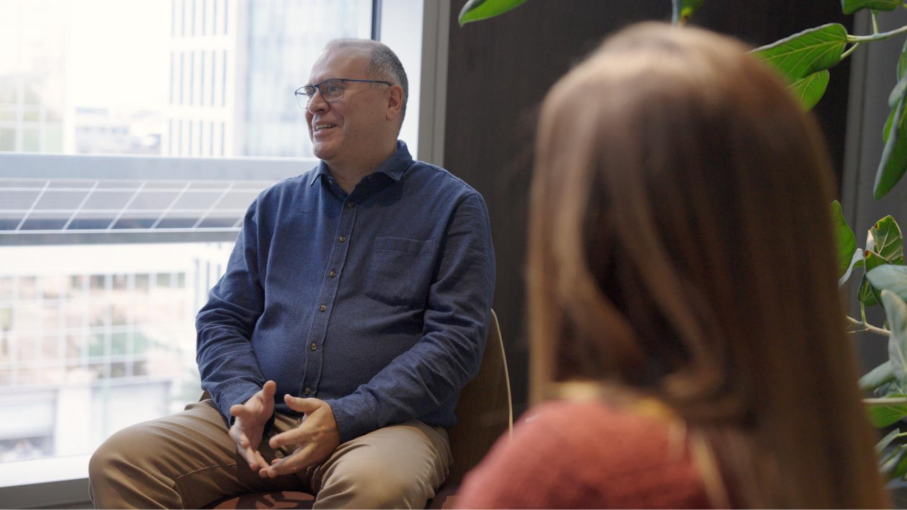
Focus on User-Friendliness
One of the greatest strengths of this project is its user-friendliness for the target audience. The AI model is fully integrated into the existing Groeipakket case application. Case managers do not need to learn a new application or take extra steps: AI results appear directly in their familiar work environment, without a separate login or workflow. No additional training is required to use the application. The focus is on supporting case managers in decision-making. AI provides a clear indication of the likelihood of action for each task, enabling users to work efficiently and with purpose.
“For me and my colleagues, this is truly a step forward. We can now see at a glance which tasks are considered important. This has a positive effect on task processing times and reduces corrections in Groeipakket cases. This way, we can help families faster and more effectively.”
(Queenie Paridaens, Team Coach, Agentschap Uitbetaling Groeipakket (VUTG))
Given the success of the AI model so far, the ambition is clear: we will continue to invest in AI support for case managers and actively explore the insights AI provides.



/1.%20Visuals/Website/Icons/RegulatoryCompliance_Visuals_Navigation%20(1).png?width=40&height=40&name=RegulatoryCompliance_Visuals_Navigation%20(1).png)


/1.%20Visuals/Website/Icons/Testing_Visuals_IconNavigation%20(1).png?width=40&height=40&name=Testing_Visuals_IconNavigation%20(1).png)


/1.%20Visuals/Website/Icons/government%201.png?width=40&height=40&name=government%201.png)
/1.%20Visuals/Website/Icons/energy_utilities%201.png?width=40&height=40&name=energy_utilities%201.png)
/1.%20Visuals/Website/Icons/defense%201.png?width=40&height=40&name=defense%201.png)
/1.%20Visuals/Website/Icons/food%201.png?width=40&height=40&name=food%201.png)
/1.%20Visuals/Website/Icons/finance%201.png?width=40&height=40&name=finance%201.png)
/1.%20Visuals/Website/Icons/manufacturing%201.png?width=40&height=40&name=manufacturing%201.png)


/1.%20Visuals/Website/Icons/CTG%20Academy.png?height=56&name=CTG%20Academy.png)


 Global
 Austria
 Belgium
 Denmark
 Germany
 Italy
Italy Romania
 Sweden
 Switzerland
 The Netherlands
 United Kingdom
 United States
/1.%20Visuals/Website/Icons/x-twitter.svg)


